Is there anything more frustrating than a WiFi signal that just won’t reach? You’re trying to stream a movie in the bedroom, get some work done on the patio, or connect a smart device in the garage, but you’re met with the dreaded buffering wheel or a “no connection” error. If this sounds familiar, a long range wifi extender might be the perfect solution to banish those dead zones for good. It’s a powerful tool designed to pick up your existing WiFi signal, amplify it, and rebroadcast it to cover larger areas, ensuring you have a strong, stable connection where you need it most.
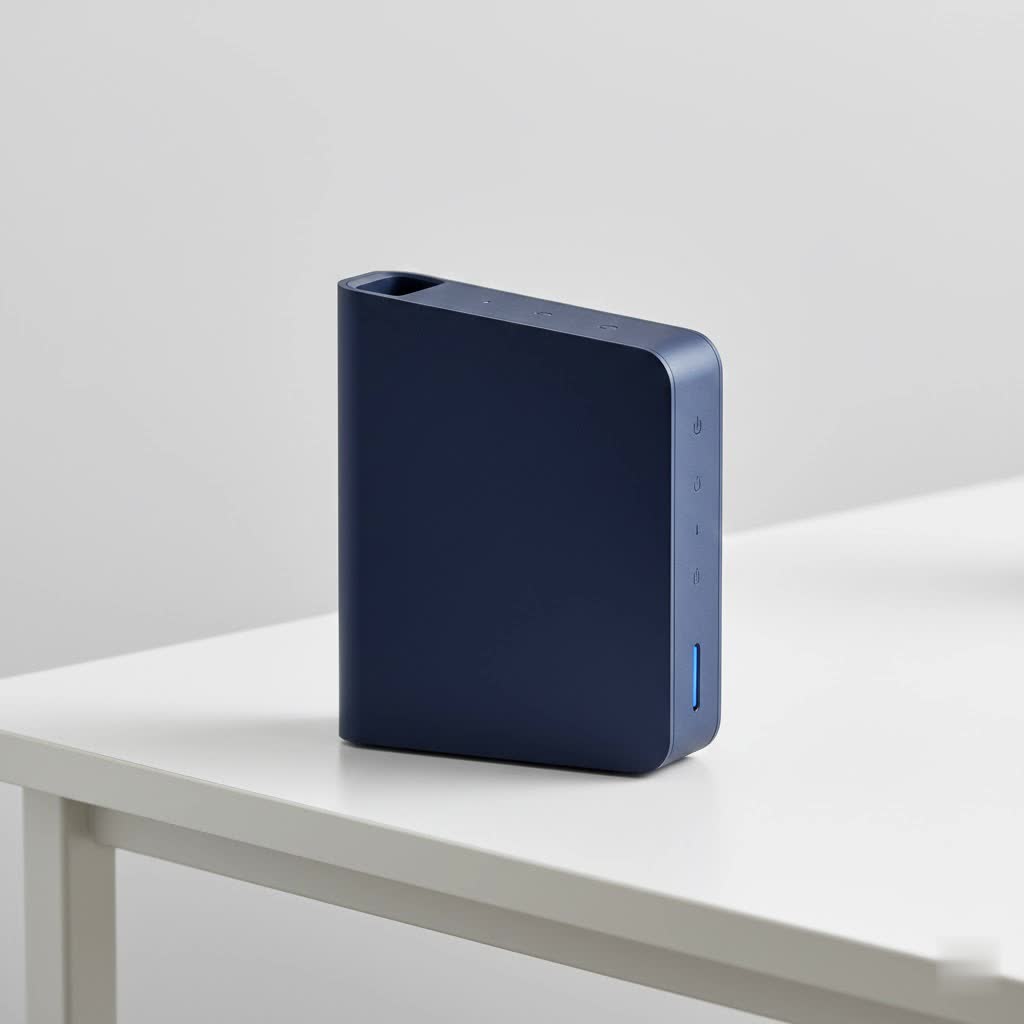
What Exactly is a WiFi Extender and How Does It Work?
Think of your WiFi router as a speaker. The closer you are, the clearer the sound. As you move farther away, the sound fades. A WiFi extender, also known as a booster or repeater, acts like a second speaker that catches the original audio and plays it again, extending its reach.
Technically, a long range wifi extender is a piece of networking hardware that sits between your main router and the area with a weak signal. It connects to your existing WiFi network, captures the signal, and then rebroadcasts it on a new channel. This simple process effectively doubles the coverage area of your wireless network, pushing the signal into the far corners of your home, basement, backyard, or even a workshop. While it extends coverage, it’s important to note that an extender is essentially re-broadcasting a signal, which can sometimes result in a slight reduction in speed compared to being next to the primary router.
Is a Long Range WiFi Extender Right for You?
Before you invest in one, let’s determine if it fits your needs. You’re a prime candidate for a WiFi extender if:
- You have specific “dead zones”: Certain rooms or areas in your house consistently have weak or no WiFi signal.
- Your home is large or has multiple floors: WiFi signals struggle to penetrate thick walls, concrete floors, and travel long distances.
- You need outdoor coverage: You want to use your devices in the backyard, on the patio, or in a detached garage.
- You have many connected devices: A high number of devices can strain your router’s range, and an extender can help share the load.
|
Our Picks for the Best Wifi Extender in 2026
As an Amazon Associate I earn from qualifying purchases.
|
||
| Num | Product | Action |
|---|---|---|
| 1 | WiFi Extender, WiFi Extenders Signal Booster for Home Up to 5000 sq.ft and 50 Devices, WiFi Range Extender, Wireless Repeater, Long Range Amplifier with Ethernet Port, 1-Tap Setup, Alexa Compatible |

|
| 2 | TP-Link AC1200 WiFi Extender, 2023 Engadget Best Budget Pick, 1.2Gbps Signal Booster for Home, Dual Band 5GHz/2.4GHz, Covers Up to 1500 Sq.ft and 30 Devices,Support Onemesh, One Ethernet Port (RE315) |
|
| 3 | Amazon eero 6 mesh wifi extender with 1-month free eero Plus (auto-renews) - Add up to 1,500 sq. ft. of Wi-Fi 6 coverage to your existing eero mesh wifi network |
|
| 4 | WiFi Extender with 4 Antennas 1200Mbps - Dual Band 5GHz/2.4GHz, WiFi Extender Signal Booster with 3 Modes Support, WiFi Repeater with 12880 Sq.ft 105 Devices, Easy Set Up for Home |
|
| 5 | Amazon eero 6+ mesh wifi system with 1 month free eero Plus (auto-renews) - Coverage up to 4,500 sq. ft., Connect 75+ devices, 3-pack |
|
| 6 | TP-Link AX3000 WiFi 6 Range Extender - PCMag Editor\'s Choice - Dual-Band Wireless Repeater w/Ethernet Port - Up to 2400 Sq. Ft., 64 Devices - Internet Signal Booster - APP Setup - EasyMesh (RE715X) |
|
| 7 | TP-Link AC1900 WiFi Range Extender RE550 - Dual-Band Wireless Repeater Amplifier w/Gigabit Ethernet Port - Up to 2200 Sq. Ft., 32 Devices - Internet Signal Booster - APP Setup - EasyMesh Compatible |
|
| 8 | 2025 WiFi Extenders Signal Booster for Home Long Range Up to 9800 sq. ft & 40 Devices, WiFi Extender Signal Booster, Quick Setup-Medium, Internet Repeater, WiFi Extender |
|
| 9 | Amazon eero 7 with 1 month free eero Plus (auto-renews) - Supports internet plans up to 2.5 Gbps, Coverage up to 2,000 sq. ft., Connect 120+ devices, 1-pack |
|
| 10 | 2025 Fastest WiFi Extender, WiFi Repeater, WiFi Booster, Covers Up to 10000 Sq.ft and 80 Devices, Internet Booster - with Ethernet Port, Quick Setup, Home Wireless Signal Booster |
|
Choosing the Best Long Range WiFi Extender: Key Features to Look For
With so many options on the market, selecting the right device can feel overwhelming. As a network specialist, I always advise focusing on a few critical features to ensure you get the performance you need.
WiFi Standards: The Need for Speed
The “language” your WiFi devices speak is determined by their standard (e.g., 802.11n, 802.11ac, 802.11ax). To avoid a bottleneck, your extender should at least match your router’s standard.
- WiFi 5 (802.11ac): This is the current standard for most households and provides excellent speeds for streaming and gaming.
- WiFi 6 (802.11ax): This is the newest standard. If you have a WiFi 6 router, getting a matching long range wifi extender is crucial for future-proofing your network and getting the best possible performance, especially in device-dense environments.
Frequency Bands: Dual-Band vs. Tri-Band
- Dual-Band: These extenders operate on two separate frequencies: 2.4 GHz (slower, but longer range) and 5 GHz (faster, but shorter range). This allows you to connect older devices to the 2.4 GHz band while reserving the faster 5 GHz band for high-bandwidth activities like 4K streaming.
- Tri-Band: These advanced extenders feature one 2.4 GHz band and two 5 GHz bands. One of the 5 GHz bands is dedicated solely to communication between the extender and the router (called a “dedicated backhaul”), which significantly reduces speed loss and network congestion. For demanding households with lots of streaming and gaming, a tri-band model is a worthwhile investment.
Antennas and Design
Don’t underestimate the importance of physical design. Extenders with external, adjustable antennas generally offer better performance and range than those with internal antennas. They allow you to aim the signal precisely where it’s needed most. You’ll also find two common styles:
- Wall Plug-in: These are compact and plug directly into an electrical outlet. They are incredibly easy to install but may have fewer features.
- Desktop: These are larger units that resemble a small router. They often have more powerful antennas, more Ethernet ports, and better overall performance.
As network engineer David Chen often says, “The best hardware in the world can’t overcome bad placement. Finding that sweet spot for your extender—halfway between your router and the dead zone—is the single most important step for achieving optimal performance.”
Essential Extra Features
- Ethernet Ports: An Ethernet port allows you to connect a wired device, like a gaming console, smart TV, or PC, directly to the extender. This provides a more stable and faster connection than wireless.
- Mesh Capability: Some modern extenders can work as part of a mesh system. This allows you to create a single, seamless network with one name and password, so your devices automatically connect to the strongest signal as you move around your home.
- App-Based Management: A user-friendly mobile app makes setup and management a breeze, allowing you to monitor connected devices and change settings from your phone.
Step-by-Step: How to Set Up Your WiFi Extender
Setting up a long range wifi extender is typically a straightforward process. While the exact steps vary by manufacturer, here is a general guide:
- Unbox and Power On: Plug the extender into a power outlet in the same room as your main router for the initial setup.
- Connect to the Extender: Use your smartphone or laptop to connect to the extender’s default WiFi network (the name will be in the instruction manual).
- Access the Setup Wizard: Open a web browser. You should be automatically redirected to the extender’s setup page. If not, you’ll need to manually enter the web address provided in the manual.
- Configure Your Network: The setup wizard will guide you through the process. You will need to select your existing home WiFi network from a list and enter its password.
- Create the Extended Network: You can typically choose to either clone your existing network name (SSID) or create a new one (e.g., “HomeWiFi_EXT”). Cloning is often easier for seamless roaming.
- Find the Optimal Location: Once setup is complete, unplug the extender and move it to its ideal location. This should be about halfway between your router and the area you want to cover. Use the signal strength indicator lights on the extender to find a spot where it still receives a strong signal from the main router.
- Connect Your Devices: Connect your devices to the newly extended network, and enjoy your improved coverage!
Troubleshooting Common WiFi Extender Issues
Even the best technology can have hiccups. Here are solutions to a few common problems:
My connection is slow through the extender.
This is often a placement issue. The extender might be too far from the router, receiving a weak signal that it then rebroadcasts. Try moving it closer to your main router. Also, ensure you’re connecting devices to the extender’s 5 GHz band for better speeds if available.
I can’t connect to the extended network.
First, try a simple reboot of both your router and the extender. If that doesn’t work, you may need to perform a factory reset on the extender and go through the setup process again. Check that you entered the correct password for your main WiFi network during setup.
The extender keeps disconnecting.
This could be due to interference from other electronic devices like microwaves or cordless phones. Try changing the WiFi channel on your main router. Also, ensure your extender’s firmware is up to date, as manufacturers release updates to fix bugs and improve stability.
Frequently Asked Questions (FAQ)
Q: Will a WiFi extender work with any router?
A: Yes, virtually all modern WiFi extenders are universally compatible and will work with any standard WiFi router, regardless of the brand or your internet service provider.
Q: Does a WiFi extender slow down my internet?
A: A WiFi extender works by re-broadcasting a signal, which inherently uses some bandwidth. While there can be a slight speed reduction (often around 50% on single-band models), the benefit of having a stable connection in a previous dead zone usually outweighs the minimal speed loss. Tri-band models with a dedicated backhaul channel significantly minimize this issue.
Q: Can I use more than one WiFi extender?
A: Yes, you can use multiple extenders in a home, but it’s not always the best solution. Each “hop” can increase latency and reduce speed. For very large homes with complex layouts, a mesh WiFi system is often a more effective and seamless solution.
Q: What’s the difference between a long range wifi extender and a mesh WiFi system?
A: An extender is a single device that repeats your router’s signal. A mesh system consists of multiple “nodes” that work together to replace your router and create a single, unified WiFi network over a large area. Mesh systems are generally more expensive but provide more seamless coverage without the speed degradation sometimes seen with extenders.
Q: How do I secure my extended network?
A: During setup, your extender will copy the security settings (like your WPA2/WPA3 encryption and password) from your main router. As long as your primary network is secure, your extended network will be as well.
Final Thoughts
A long range wifi extender is a cost-effective and powerful solution for eliminating frustrating WiFi dead zones. By understanding the key features like WiFi standards, frequency bands, and antenna design, you can choose a device that perfectly suits your home’s needs. Proper placement is the final piece of the puzzle to unlock a strong, reliable internet connection across your entire property. Say goodbye to buffering and hello to seamless connectivity, everywhere.
