A Wavlink WiFi extender amplifies your existing WiFi signal to eliminate dead zones and improve coverage throughout your home or office. Setting up a Wavlink extender is typically a straightforward process, often completed within minutes using either the WPS button or a web browser interface. Proper placement, about halfway between your router and the weak signal area, is crucial for optimal performance.
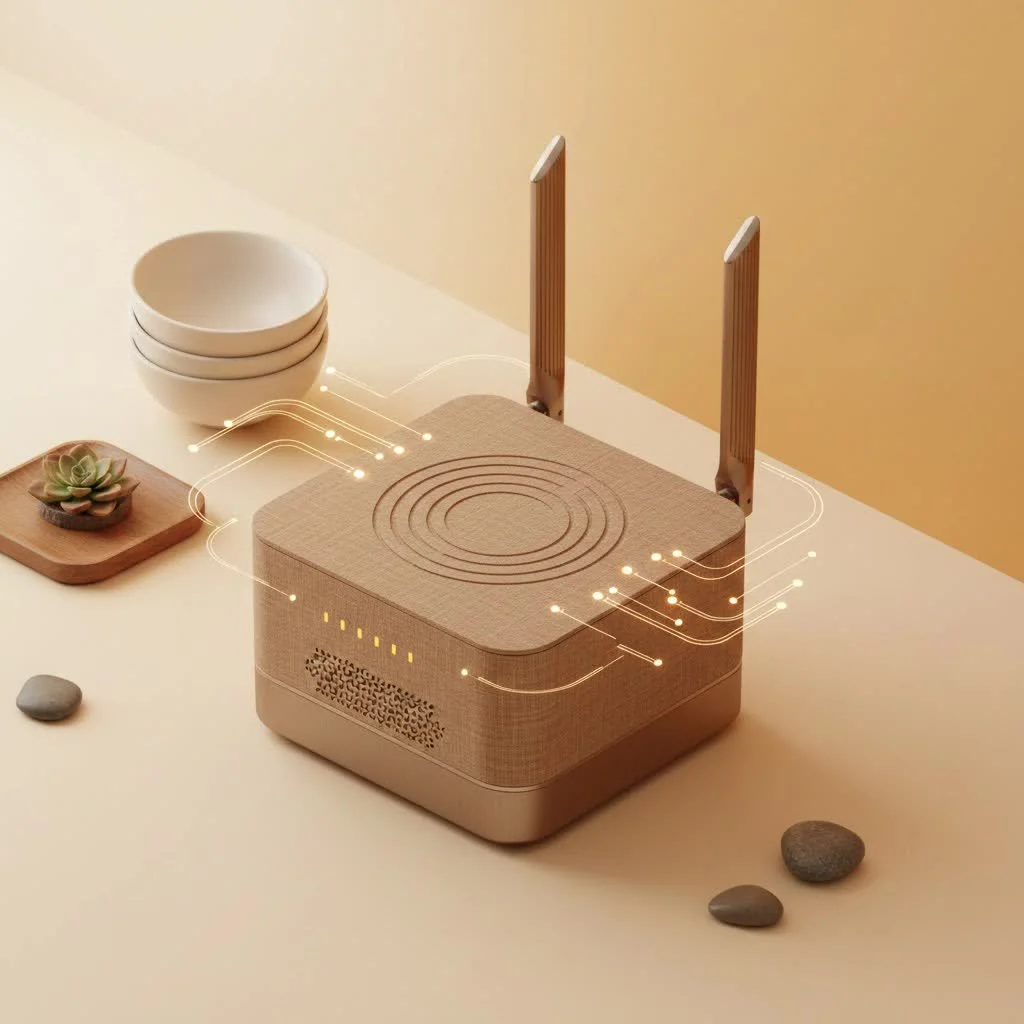 WiFi extender device with signal waves” style=”margin: 20px auto;width: 800px;max-width: 100%;height: auto” />
What Exactly is a Wavlink WiFi Extender?
Think of your WiFi router as a speaker. The further you are from it, the fainter the sound. A Wavlink WiFi extender acts like a second speaker that picks up the original audio and rebroadcasts it, ensuring the sound is clear and strong even in distant rooms.
Technically, it captures the existing wireless signal from your main router and then re-transmits it on a new channel. This creates a secondary network that extends the reach of your primary one, effectively eliminating dead spots and providing a more reliable internet experience for all your devices.
How to Set Up Your Wavlink WiFi Extender
Getting your Wavlink extender up and running is usually a straightforward process. There are two primary methods you can use. Before you start, plug the extender into a power outlet in the same room as your router for the initial setup.
Method 1: Using the WPS Button (The 2-Minute Setup)
WPS (Wi-Fi Protected Setup) is the simplest way to connect your extender. If your router has a WPS button, you’re just a few presses away from better WiFi.
- Plug and Power On: Connect your Wavlink extender to a power outlet near your router and wait for the power LED to become solid.
- Press WPS on Router: Press the WPS button on your main router. You usually have a two-minute window to complete the next step.
- Press WPS on Extender: Immediately press the WPS button on your Wavlink extender.
- Wait for Connection: The WPS/Signal light on the extender will start blinking. Once it turns solid, it means a secure connection has been established.
- Relocate the Extender: You can now unplug the extender and move it to an optimal location, ideally halfway between your router and the area with a weak signal. Use the signal strength indicator lights to find the best spot.
Method 2: Using a Web Browser
If your router doesn’t have a WPS button, or if the WPS method fails, setting it up through a web browser is the most reliable alternative.
- Plug In and Connect: Plug the extender into a power outlet. Using your computer, tablet, or smartphone, connect to the extender’s default WiFi network (e.g., “WAVLINK-N” or “WAVLINK-AC”).
- Open a Web Browser: Launch any web browser (like Chrome, Firefox, or Safari). In the address bar, type
wifi.wavlink.comor the IP address192.168.10.1. - Log In: A login screen will appear. The default password is typically
admin. Enter it and proceed. - Start the Wizard: The setup wizard will launch automatically. Select “Extender Mode” to begin.
- Scan for Networks: The device will scan for available WiFi networks. Select your home WiFi network from the list.
- Enter Your WiFi Password: Type in the password for your home WiFi network carefully.
- Configure the Extended Network: You can either copy the same name (SSID) as your main network or create a new name for the extended network (e.g., “HomeWiFi_EXT”). Creating a new name makes it easier to know which network you are connected to.
- Finalize and Reboot: Review the settings and click “Connect” or “Finish.” The extender will save your settings and reboot. This process can take a couple of minutes.
- Relocate and Test: Once rebooted, move the extender to its ideal location. Connect a device to the new extended network to confirm you have internet access.
“Proper placement is the single most important factor for extender performance. People often place it in the dead zone itself, which is a mistake. The extender needs to receive a strong signal to be able to rebroadcast one.” – David Chen, Network Engineer
Tips for Optimizing Your Wavlink Extender’s Performance
Once your extender is set up, a few tweaks can significantly improve its speed and reliability.
- Find the Sweet Spot: The extender’s location is critical. It should be close enough to the router to receive a strong, stable signal but far enough to extend coverage to the desired area. Use the signal indicator LEDs on the device to guide you.
- Avoid Obstructions: Place the extender in an open area, away from thick walls, metal objects, and appliances like microwaves or cordless phones, which can interfere with the signal.
- Update the Firmware: Manufacturers periodically release firmware updates to improve performance and security. Check the Wavlink support website for the latest version for your model and follow the instructions to update it through the web interface.
- Use the Right Band: If you have a dual-band extender, use the 5GHz band for devices that need higher speeds and are closer to the extender (like for streaming or gaming). Use the 2.4GHz band for devices that are further away or only need a basic connection.
Common Wavlink WiFi Extender Problems and Solutions
Even with a perfect setup, you might run into issues. Here are some common problems and how to fix them.
Problem: The Extender Won’t Connect to the Router
|
Our Picks for the Best Wifi Extender in 2026
As an Amazon Associate I earn from qualifying purchases.
|
||
| Num | Product | Action |
|---|---|---|
| 1 | TP-Link AX3000 WiFi 6 Range Extender - PCMag Editor\'s Choice - Dual-Band Wireless Repeater w/Ethernet Port - Up to 2400 Sq. Ft., 64 Devices - Internet Signal Booster - APP Setup - EasyMesh (RE715X) |

|
| 2 | Amazon eero 7 with 1 month free eero Plus (auto-renews) - Supports internet plans up to 2.5 Gbps, Coverage up to 2,000 sq. ft., Connect 120+ devices, 1-pack |
|
| 3 | TP-Link AC1900 WiFi Range Extender RE550 - Dual-Band Wireless Repeater Amplifier w/Gigabit Ethernet Port - Up to 2200 Sq. Ft., 32 Devices - Internet Signal Booster - APP Setup - EasyMesh Compatible |
|
| 4 | Amazon eero 6+ mesh wifi system with 1 month free eero Plus (auto-renews) - Coverage up to 4,500 sq. ft., Connect 75+ devices, 3-pack |
|
| 5 | WiFi Extender with 4 Antennas 1200Mbps - Dual Band 5GHz/2.4GHz, WiFi Extender Signal Booster with 3 Modes Support, WiFi Repeater with 12880 Sq.ft 105 Devices, Easy Set Up for Home |
|
| 6 | Amazon eero 6 mesh wifi extender with 1-month free eero Plus (auto-renews) - Add up to 1,500 sq. ft. of Wi-Fi 6 coverage to your existing eero mesh wifi network |
|
| 7 | 2025 WiFi Extenders Signal Booster for Home Long Range Up to 9800 sq. ft & 40 Devices, WiFi Extender Signal Booster, Quick Setup-Medium, Internet Repeater, WiFi Extender |
|
| 8 | WiFi Extender, WiFi Extenders Signal Booster for Home Up to 5000 sq.ft and 50 Devices, WiFi Range Extender, Wireless Repeater, Long Range Amplifier with Ethernet Port, 1-Tap Setup, Alexa Compatible |
|
| 9 | 2025 Fastest WiFi Extender, WiFi Repeater, WiFi Booster, Covers Up to 10000 Sq.ft and 80 Devices, Internet Booster - with Ethernet Port, Quick Setup, Home Wireless Signal Booster |
|
| 10 | TP-Link AC1200 WiFi Extender, 2023 Engadget Best Budget Pick, 1.2Gbps Signal Booster for Home, Dual Band 5GHz/2.4GHz, Covers Up to 1500 Sq.ft and 30 Devices,Support Onemesh, One Ethernet Port (RE315) |
|
If the initial setup fails or the extender keeps disconnecting, try these steps:
- Check Your Password: A simple typo in the WiFi password is the most common cause. Double-check that you’ve entered it correctly.
- Move Closer: During setup, ensure the extender is in the same room as the router.
- Factory Reset: If all else fails, a factory reset can resolve many issues. Find the small reset button on the device. Use a paperclip to press and hold it for about 10 seconds until the lights flash. This will restore it to factory settings, and you’ll need to repeat the setup process.
Problem: Slow Internet Speeds on the Extended Network
An extender will always have some speed loss, but if it’s unusually slow, consider these points:
- Placement is Key: The extender might be too far from the router. Move it closer and check if speeds improve.
- Network Congestion: Too many devices on one band can slow it down. Try to split your devices between the 2.4GHz and 5GHz bands if you have a dual-band model.
- Firmware Update: An outdated firmware can cause performance issues. Make sure it’s updated.
Problem: Can’t Access the Setup Page (wifi.wavlink.com)
If you can’t open the web interface, try these solutions:
- Check Your Connection: Make sure you are connected to the Wavlink extender’s WiFi network, not your home network.
- Use the IP Address: Instead of the URL, type the default IP address
192.168.10.1directly into your browser’s address bar. - Clear Browser Cache: Sometimes your browser’s cache can cause login issues. Clear it or try using a different browser.
Frequently Asked Questions (FAQ)
Q: Can I use a Wavlink extender with any router?A: Yes, Wavlink WiFi extenders are designed to be universally compatible with almost any standard WiFi router, regardless of the brand.
Q: Does a WiFi extender make my internet faster?A: A WiFi extender does not increase your internet plan’s speed. It expands the coverage of your existing signal. It can improve your connection speed in areas where the signal was previously weak or unstable, but it will not exceed the speed provided by your main router.
Q: Should I use the same network name (SSID) for my extender?A: It’s a matter of preference. Using the same SSID allows for a more seamless experience, as your devices can automatically switch between the router and extender. However, using a different name (e.g., adding “_EXT”) makes it clear which network you’re connected to, which can be helpful for troubleshooting.
Q: How do I know where to place my Wavlink extender?A: The ideal location is about halfway between your router and the WiFi dead zone. Most Wavlink extenders have smart signal indicator lights that help you find a spot with a strong connection back to the router.
Final Thoughts
A Wavlink WiFi extender is a powerful and affordable tool for eliminating frustrating dead zones and ensuring a stable internet connection throughout your home or office. By following the simple setup steps and optimization tips outlined in this guide, you can easily expand your network’s reach. Remember that proper placement is crucial, so take a few minutes to find that perfect spot. Now you can enjoy seamless streaming, gaming, and browsing from any room you choose.
Get our weekly buyer guide
Practical specs, not advice. Unsubscribe anytime.
I was so tired of dead zones in my house, especially in the back bedroom. This Wavlink extender was a game-changer! Setup was super easy, I just used the WPS button and it connected right away. Now I have full bars everywhere, even outside on the patio. Definitely recommend it if you’re struggling with spotty WiFi.
I picked up a Wavlink extender after reading about how they re-transmit the signal on a new channel. My old extender just mirrored the existing one and caused interference. This one actually created a secondary network that’s much more stable. The web browser interface for setup was pretty intuitive too, which was a plus.
The Wavlink extender did help with the signal in my garage, which was a major dead zone before. However, I found that the speed isn’t quite as fast as my main router, even with proper placement. It’s good enough for browsing and email, but I wouldn’t try streaming 4K video through it. Still, it’s better than no signal at all.
My home office is on the opposite side of the house from my router, and I always had issues with video calls dropping. This Wavlink extender completely solved that problem. I placed it about halfway between the router and my office, and now my connection is solid. It’s like having a brand new router just for my workspace!