If you’re searching for a Ubiquiti Wifi Extender, you’ve likely hit a point where standard consumer-grade solutions just aren’t cutting it anymore. You’re tired of dead zones, dropped connections, and the endless frustration of a network that can’t keep up. You’ve heard about Ubiquiti’s reputation for professional-grade performance, and you’re ready to bring that power into your home or office. But here’s the interesting part: Ubiquiti doesn’t really make “WiFi extenders” in the traditional sense. Instead, they offer something far superior.
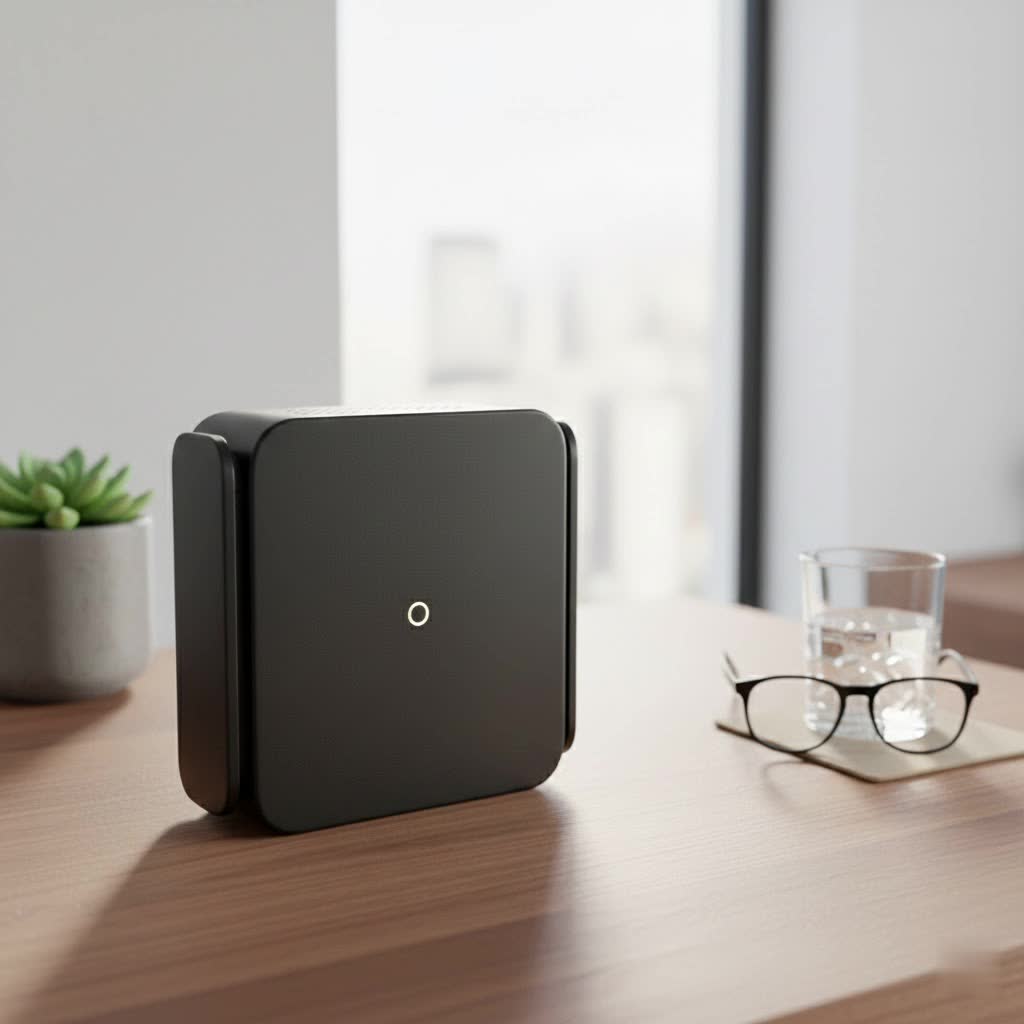
As a network professional with over 15 years of experience designing and troubleshooting wireless systems, I’m here to guide you through the Ubiquiti ecosystem. We’ll explore why their approach is different and how you can use their technology to create a seamless, powerful network that eliminates dead zones for good. This isn’t just about extending your signal; it’s about fundamentally upgrading your entire wireless experience.
Why You Won’t Find a Classic “Ubiquiti WiFi Extender”
First, let’s address the elephant in the room. When most people think of a WiFi extender, they picture a small, plug-in device that grabs an existing WiFi signal and re-broadcasts it. While simple, this method has significant drawbacks.
Traditional extenders create a separate network, cut your available bandwidth in half, and often lead to frustrating connection drops as your devices switch between the router and the extender. Ubiquiti, a brand built for performance and reliability, steers clear of this flawed model.
Instead, Ubiquiti focuses on two core technologies: Access Points (APs) and Mesh Systems. These solutions are designed to work together to create one unified, intelligent network.
As network architect David Chen often says, “Using a traditional extender is like having someone shout a message from another room. Using a Ubiquiti Access Point is like having a clear, direct conversation. The quality and reliability are simply in a different league.”
The UniFi Solution: Extending WiFi the Right Way
The heart of Ubiquiti’s networking gear is the UniFi ecosystem. It’s a family of devices—switches, gateways, and access points—that work together under a single management interface. When it comes to extending your WiFi, UniFi Access Points are the primary tool for the job.
What are UniFi Access Points (APs)?
|
Our Picks for the Best Wifi Extender in 2026
As an Amazon Associate I earn from qualifying purchases.
|
||
| Num | Product | Action |
|---|---|---|
| 1 | TP-Link AC1200 WiFi Extender, 2023 Engadget Best Budget Pick, 1.2Gbps Signal Booster for Home, Dual Band 5GHz/2.4GHz, Covers Up to 1500 Sq.ft and 30 Devices,Support Onemesh, One Ethernet Port (RE315) |

|
| 2 | 2025 WiFi Extenders Signal Booster for Home Long Range Up to 9800 sq. ft & 40 Devices, WiFi Extender Signal Booster, Quick Setup-Medium, Internet Repeater, WiFi Extender |
|
| 3 | Amazon eero 6+ mesh wifi system with 1 month free eero Plus (auto-renews) - Coverage up to 4,500 sq. ft., Connect 75+ devices, 3-pack |
|
| 4 | Amazon eero 7 with 1 month free eero Plus (auto-renews) - Supports internet plans up to 2.5 Gbps, Coverage up to 2,000 sq. ft., Connect 120+ devices, 1-pack |
|
| 5 | WiFi Extender, WiFi Extenders Signal Booster for Home Up to 5000 sq.ft and 50 Devices, WiFi Range Extender, Wireless Repeater, Long Range Amplifier with Ethernet Port, 1-Tap Setup, Alexa Compatible |
|
| 6 | Amazon eero 6 mesh wifi extender with 1-month free eero Plus (auto-renews) - Add up to 1,500 sq. ft. of Wi-Fi 6 coverage to your existing eero mesh wifi network |
|
| 7 | WiFi Extender with 4 Antennas 1200Mbps - Dual Band 5GHz/2.4GHz, WiFi Extender Signal Booster with 3 Modes Support, WiFi Repeater with 12880 Sq.ft 105 Devices, Easy Set Up for Home |
|
| 8 | TP-Link AC1900 WiFi Range Extender RE550 - Dual-Band Wireless Repeater Amplifier w/Gigabit Ethernet Port - Up to 2200 Sq. Ft., 32 Devices - Internet Signal Booster - APP Setup - EasyMesh Compatible |
|
| 9 | 2025 Fastest WiFi Extender, WiFi Repeater, WiFi Booster, Covers Up to 10000 Sq.ft and 80 Devices, Internet Booster - with Ethernet Port, Quick Setup, Home Wireless Signal Booster |
|
| 10 | TP-Link AX3000 WiFi 6 Range Extender - PCMag Editor\'s Choice - Dual-Band Wireless Repeater w/Ethernet Port - Up to 2400 Sq. Ft., 64 Devices - Internet Signal Booster - APP Setup - EasyMesh (RE715X) |
|
A UniFi Access Point is a device that broadcasts a WiFi signal. Unlike an extender, an AP is typically connected directly to your main network via an Ethernet cable. This hardwired connection, known as the “backhaul,” ensures that the AP receives a full-strength, stable signal from your router, which it can then broadcast wirelessly at maximum speed.
By placing multiple APs strategically throughout your property, you create overlapping zones of coverage. Your phone, laptop, or other devices will automatically and seamlessly roam to the AP with the strongest signal without you ever noticing.
How Does UniFi Mesh Work?
What if you can’t run an Ethernet cable to a location that needs better WiFi? This is where UniFi’s mesh technology comes in. Many modern UniFi APs, like the U6 Mesh, can be used to create a wireless mesh network.
In this setup, one AP is hardwired to your router, and one or more additional “mesh” APs are placed within its range. These mesh APs connect to the main AP wirelessly, creating a “wireless uplink.” They then rebroadcast the signal to cover dead zones. While this is conceptually similar to an extender, UniFi’s mesh technology is far more sophisticated, managing traffic intelligently to minimize speed loss and maintain a single, seamless network.
How to Set Up Your Ubiquiti WiFi Extension
Getting a UniFi system up and running is more involved than plugging in a cheap extender, but the results are well worth the effort. Here’s a simplified step-by-step guide.
- Choose Your Hardware: First, decide if you can run an Ethernet cable.
- For the Best Performance: Choose a standard UniFi AP like the UniFi 6 Lite (U6 Lite) or UniFi 6 Pro (U6 Pro). You will need to connect this to your router with an Ethernet cable.
- For Wireless Flexibility: If running a cable is impossible, select a mesh-capable AP like the UniFi 6 Mesh (U6 Mesh). You will still need at least one hardwired UniFi AP to start your network.
- Install the UniFi Network Controller: This is the software that manages all your UniFi devices. You can run it for free on a computer, or for an always-on solution, use a Ubiquiti hardware controller like the UniFi Dream Machine or a Cloud Key.
- Connect and Power Your AP: Most UniFi APs are powered using Power over Ethernet (PoE). This means a single Ethernet cable provides both data and power. You may need a PoE injector or a PoE switch to power the device.
- Adopt the Device: Once connected and powered on, the new AP will appear in your UniFi Network Controller. With a single click on “Adopt,” the controller will automatically configure the device to match your existing network settings.
- Optimize Placement: Position your AP in a central location, away from thick walls or metal objects, for the best coverage. For a mesh setup, ensure the remote AP has a strong wireless connection to the main AP.
Best Ubiquiti Devices for Extending Your WiFi
Choosing the right device depends on your needs and budget. Here’s a quick comparison of popular models that function as a high-performance Ubiquiti WiFi extender solution.
| Model | Ideal Use Case | Key Feature | Connectivity |
|---|---|---|---|
| UniFi 6 Lite (U6 Lite) | Small to medium homes, budget-conscious | Excellent value for WiFi 6 performance | Hardwired (Ethernet) |
| UniFi 6 Pro (U6 Pro) | Large homes, offices, high-density environments | High throughput for many devices | Hardwired (Ethernet) |
| UniFi 6 Mesh (U6 Mesh) | Outdoor areas, or indoors where cabling is difficult | Flexible mounting, wireless mesh capability | Hardwired or Wireless |
Frequently Asked Questions (FAQ)
Is a Ubiquiti system better than a regular WiFi extender?
Absolutely. While the initial setup is more complex, a Ubiquiti system provides a single, seamless network with vastly superior speed, stability, and coverage compared to traditional extenders that halve your bandwidth and create unreliable connections.
Do I need a UniFi Dream Machine to use UniFi APs?
No, you don’t. You can run the free UniFi Network Controller software on any Mac, Windows, or Linux computer. However, a UniFi Dream Machine (UDM) or Dream Router (UDR) simplifies the process by combining a router, switch, controller, and access point into a single, easy-to-use device.
Can I just add one UniFi AP to my existing router from another brand?
Yes, you can. A single UniFi AP can be added to any existing network. You would disable the WiFi on your old router and let the UniFi AP handle all wireless duties, providing a significant performance boost.
How far can a Ubiquiti UniFi AP reach?
The range varies based on the model and environment, but a typical indoor AP can cover around 1,500 square feet (140 square meters) in an open area. Obstructions like brick walls and concrete floors will reduce this range. The key is to use multiple APs for complete coverage rather than relying on a single, powerful one.
Is Ubiquiti UniFi too complicated for home use?
While it was originally designed for enterprise use, Ubiquiti has made great strides in making the UniFi system accessible for tech-savvy homeowners. If you are comfortable with basic networking concepts, you will find the setup process rewarding and the performance benefits transformative.
Conclusion: Upgrade, Don’t Just Extend
While you may have started your search looking for a Ubiquiti WiFi extender, you’ve now discovered a more powerful way to solve your network problems. By moving away from the limitations of traditional extenders and embracing the robust, unified approach of the UniFi ecosystem, you’re not just patching a dead zone—you’re building a network foundation that’s fast, reliable, and ready for the future.
Investing in a UniFi Access Point or mesh system is one of the most significant upgrades you can make to your digital life. Say goodbye to buffering, dropped video calls, and WiFi dead zones, and say hello to a seamless connection everywhere you need it.
