Are you tired of playing hide-and-seek with your WiFi signal? It’s a common frustration: you have a strong connection in the living room, but the moment you step into the bedroom or home office, the signal vanishes. These WiFi “dead zones” can bring productivity and entertainment to a grinding halt. Fortunately, a simple and effective solution is readily available. This guide will walk you through everything you need to know about choosing, setting up, and optimizing a target wifi extender to finally get a strong, reliable connection in every corner of your home.
What is a WiFi Extender and How Does It Work?
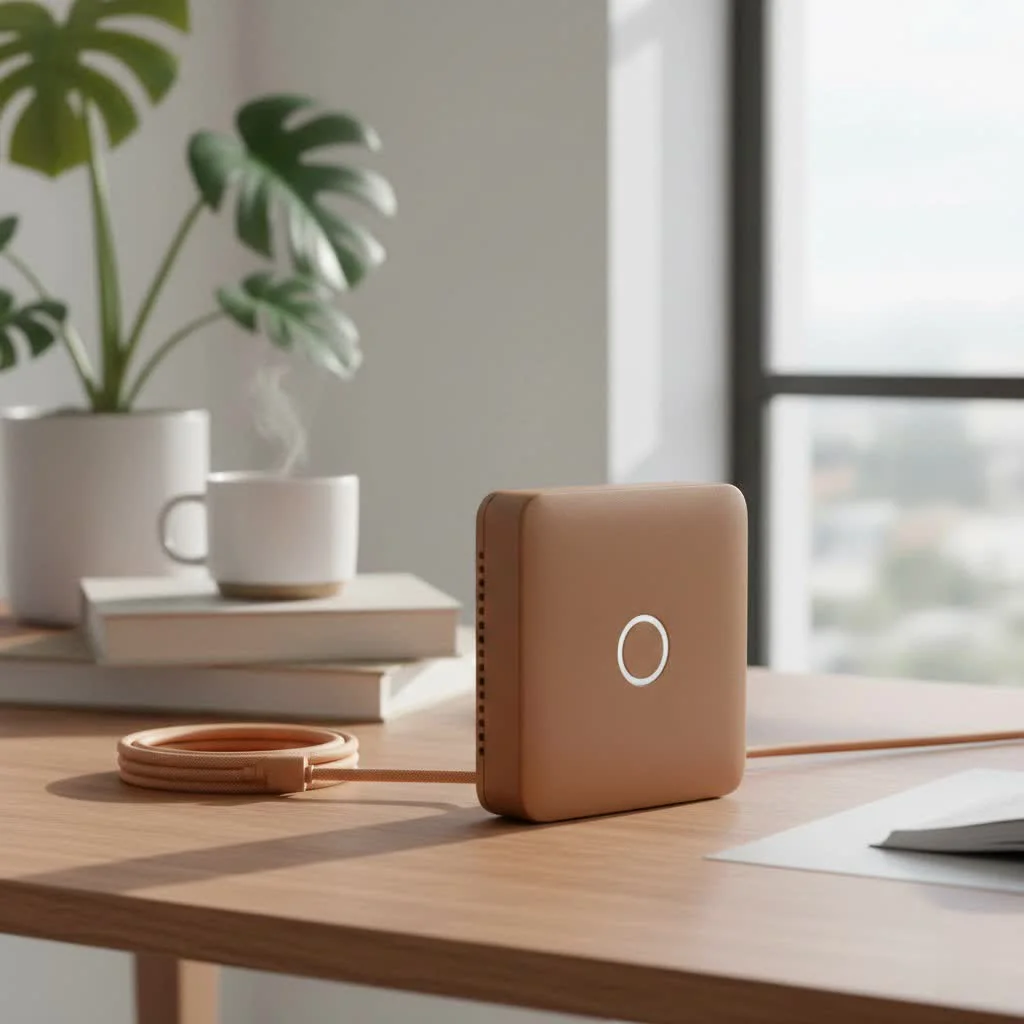
Think of a WiFi extender as a relay runner for your internet signal. It captures the existing WiFi signal from your main router and then rebroadcasts it to areas where the signal is weak or non-existent. It’s a bridge that extends the reach of your network, effectively eliminating those frustrating dead zones.
The process is straightforward:
- The extender connects to your existing WiFi network.
- It takes that signal and amplifies it.
- It broadcasts this newly strengthened signal on a new, extended network.
This allows your devices—laptops, smartphones, smart TVs—in previously out-of-range areas to connect with ease.
Why You Might Need a WiFi Extender
How do you know if a WiFi extender is the right solution for you? You’re a prime candidate if you experience any of the following common issues:
- Dead Zones: Certain rooms or areas in your home have no WiFi signal at all.
- Weak Signals: Your devices show only one or two bars of WiFi, leading to slow loading times and buffering.
- Obstructions: Your home has thick walls, multiple floors, or metal appliances that block the WiFi signal from your router.
- Large Area: Your home is large, and the router’s signal simply can’t cover the entire square footage.
- Outdoor Coverage: You want to extend your WiFi signal to your backyard, patio, or garage.
How to Choose the Right Target WiFi Extender
Walking into the electronics aisle can be overwhelming, but selecting the right extender is easy when you know what to look for. Focus on these key areas to find the perfect match for your needs.
Key Features to Consider
- WiFi Standard (e.g., WiFi 5, WiFi 6): Try to match the extender’s WiFi standard to your router’s. A WiFi 6 (802.11ax) router paired with a WiFi 6 extender will deliver the best performance. However, they are backward-compatible, so a WiFi 6 extender will still work with a WiFi 5 (802.11ac) router.
- Speed: Look for the extender’s speed rating (e.g., AC1200, AX1800). This indicates the maximum theoretical speed. A higher number generally means better performance, especially if you have a fast internet plan.
- Bands (Dual-Band vs. Tri-Band): Dual-band extenders operate on two frequencies (2.4GHz and 5GHz). The 2.4GHz band offers longer range, while the 5GHz band provides faster speeds. A tri-band extender adds a second 5GHz band, which can be dedicated to communication between the router and extender, significantly improving performance.
- MU-MIMO Technology: This stands for “Multi-User, Multiple Input, Multiple Output.” It allows the extender to communicate with multiple devices simultaneously, reducing lag and improving efficiency for everyone on the network.
- Ethernet Port: An Ethernet port is a great feature that allows you to connect a wired device, such as a gaming console or desktop PC, for a more stable and faster connection.
Types of Extenders: Plug-In vs. Desktop
|
Our Picks for the Best Wifi Extender in 2026
As an Amazon Associate I earn from qualifying purchases.
|
||
| Num | Product | Action |
|---|---|---|
| 1 | TP-Link AC1900 WiFi Range Extender RE550 - Dual-Band Wireless Repeater Amplifier w/Gigabit Ethernet Port - Up to 2200 Sq. Ft., 32 Devices - Internet Signal Booster - APP Setup - EasyMesh Compatible |

|
| 2 | WiFi Extender with 4 Antennas 1200Mbps - Dual Band 5GHz/2.4GHz, WiFi Extender Signal Booster with 3 Modes Support, WiFi Repeater with 12880 Sq.ft 105 Devices, Easy Set Up for Home |
|
| 3 | WiFi Extender, WiFi Extenders Signal Booster for Home Up to 5000 sq.ft and 50 Devices, WiFi Range Extender, Wireless Repeater, Long Range Amplifier with Ethernet Port, 1-Tap Setup, Alexa Compatible |
|
| 4 | 2025 WiFi Extenders Signal Booster for Home Long Range Up to 9800 sq. ft & 40 Devices, WiFi Extender Signal Booster, Quick Setup-Medium, Internet Repeater, WiFi Extender |
|
| 5 | Amazon eero 6 mesh wifi extender with 1-month free eero Plus (auto-renews) - Add up to 1,500 sq. ft. of Wi-Fi 6 coverage to your existing eero mesh wifi network |
|
| 6 | TP-Link AC1200 WiFi Extender, 2023 Engadget Best Budget Pick, 1.2Gbps Signal Booster for Home, Dual Band 5GHz/2.4GHz, Covers Up to 1500 Sq.ft and 30 Devices,Support Onemesh, One Ethernet Port (RE315) |
|
| 7 | Amazon eero 7 with 1 month free eero Plus (auto-renews) - Supports internet plans up to 2.5 Gbps, Coverage up to 2,000 sq. ft., Connect 120+ devices, 1-pack |
|
| 8 | TP-Link AX3000 WiFi 6 Range Extender - PCMag Editor\'s Choice - Dual-Band Wireless Repeater w/Ethernet Port - Up to 2400 Sq. Ft., 64 Devices - Internet Signal Booster - APP Setup - EasyMesh (RE715X) |
|
| 9 | 2025 Fastest WiFi Extender, WiFi Repeater, WiFi Booster, Covers Up to 10000 Sq.ft and 80 Devices, Internet Booster - with Ethernet Port, Quick Setup, Home Wireless Signal Booster |
|
| 10 | Amazon eero 6+ mesh wifi system with 1 month free eero Plus (auto-renews) - Coverage up to 4,500 sq. ft., Connect 75+ devices, 3-pack |
|
You’ll generally find two main form factors for WiFi extenders:
- Wall Plug-In Extenders: These are the most common type. They are compact and plug directly into a wall outlet, making for a discreet and simple setup. They are perfect for covering small to medium-sized dead zones.
- Desktop Extenders: These are larger units that resemble a small router. They often have more powerful antennas and more features, such as multiple Ethernet ports. Desktop extenders are ideal for covering larger areas or for users who need the best possible performance for gaming or 4K streaming.
Step-by-Step: Setting Up Your New WiFi Extender
Setting up a modern WiFi extender is easier than you think. Most models use a simple plug-and-play approach.
- Unbox and Plug In: Take the extender out of the box and plug it into a power outlet in the same room as your main router for the initial setup.
- Connect to the Extender’s Network: On your smartphone or laptop, go to your WiFi settings and connect to the network created by the extender (the name will be in the instruction manual, often something like “TP-Link_Extender”).
- Launch the Setup Wizard: Open a web browser. You should be automatically redirected to the extender’s setup page. If not, type the web address provided in the manual (like
tplinkrepeater.net). - Configure the Extender: Follow the on-screen instructions. You will be asked to select your main home WiFi network and enter its password. This allows the extender to connect and begin repeating the signal.
- Relocate the Extender: Once the setup is complete, unplug the extender. Now, move it to a new location that is roughly halfway between your router and the WiFi dead zone. The key is to find a spot where it can still receive a strong signal from the router.
- Test the Connection: Connect your device to the new, extended network and enjoy your improved coverage!
Expert Tip: “The biggest mistake people make is placing the extender in the dead zone itself. The extender needs to receive a solid signal to rebroadcast one. Finding that perfect halfway point is the secret to maximizing performance,” notes network engineer Dr. Alistair Finch.
Pro Tips for Optimizing Performance
Once your extender is running, a few tweaks can make a big difference.
- Find the Sweet Spot: Use a WiFi analyzer app on your phone to find the ideal location. You’re looking for a spot where the signal strength from your main router is at least -60 dBm.
- Update Firmware: Regularly check the manufacturer’s website for firmware updates. These updates often include performance improvements and security patches.
- Avoid Obstructions: Keep the extender in an open area, away from large metal objects, microwaves, and thick concrete walls that can interfere with the signal.
- Use the Right Band: For devices that need speed (like a streaming stick or gaming console), connect to the 5GHz band. For devices that are far away and just need a basic connection, the 2.4GHz band is better.
Frequently Asked Questions (FAQ)
What’s the difference between a WiFi extender and a mesh system?
A WiFi extender simply repeats an existing signal, creating a new, separate network. A mesh WiFi system replaces your router entirely and uses multiple “nodes” that work together to create a single, seamless WiFi network throughout your home.
Will a WiFi extender slow down my internet?
An extender can introduce a small amount of latency, which might slightly reduce speeds. This is because it has to receive and then rebroadcast the signal. However, for most activities, the benefit of a stable connection in a dead zone far outweighs any minor speed reduction.
Where is the best place to put my WiFi extender?
The optimal location is about halfway between your router and the area with a weak signal. It needs to be close enough to the router to get a strong signal to repeat.
Can I use two WiFi extenders?
While you technically can, it’s not recommended. Chaining extenders can lead to significant speed degradation and network instability. If you need more coverage than one extender can provide, a mesh WiFi system is a much better solution.
Is it hard to set up a WiFi extender from Target?
Not at all. Most modern extenders from brands like Netgear and TP-Link feature very user-friendly setup processes, often guided by a mobile app or a simple web interface that takes only a few minutes.
The Final Word
A WiFi extender is a powerful and affordable tool for conquering frustrating dead zones and ensuring you have a reliable internet connection wherever you need it. By understanding the key features, choosing a model that fits your home, and following a few simple setup and optimization tips, you can easily find the perfect target wifi extender to solve your connectivity woes. Say goodbye to buffering and hello to seamless streaming, gaming, and browsing in every room of the house.
Get our weekly buyer guide
Practical specs, not advice. Unsubscribe anytime.
My biggest issue was the backyard patio where I like to work sometimes, but the WiFi signal was always non-existent out there. After reading about how these devices extend your network, I grabbed one. It was super easy to set up, and now I can actually get work done outside without using up all my mobile data. It’s not quite as fast as being right next to the router, but it’s a huge improvement.
I’ve always struggled with WiFi dead zones in my basement, making it impossible to game down there. This guide’s explanation of how to optimize an extender was really helpful. I followed the tips for placement and now the signal is strong and stable. No more frustrating disconnections during online matches!
The extender I got from Target definitely helped with the signal in my bedroom, but it didn’t completely eliminate the lag when I’m streaming 4K content. It’s much better than before, but I was hoping for a perfect connection. Still, for basic browsing and email, it’s a solid improvement and worth the price.
I was so tired of my WiFi dropping out in my home office, which is on the other side of the house from my router. This guide really helped me understand how a WiFi extender works as a ‘relay runner’ and I picked one up at Target. Setup was a breeze, and now I have full bars for all my video calls. Highly recommend for anyone dealing with dead zones!